Al Ain Heritage Guide: The UAE's Garden City
Al Ain is where the UAE's pre-oil history is easiest to see: a 3,000-year-old oasis still irrigated by ancient falaj channels, a mountain road with hairpin views, and a fort where Sheikh Zayed himself was born.
Quick answer: Al Ain's essentials are Al Ain Oasis (a UNESCO-listed working date palm oasis with free walking trails), Jebel Hafeet (the UAE's second-highest peak, with a paved summit road), Al Jahili Fort (Sheikh Zayed's birthplace fort, built 1891), and Al Ain Zoo. It is roughly 90 minutes from both Dubai and Abu Dhabi.
Al Ain Oasis: a living UNESCO site
Unlike a museum recreation, Al Ain Oasis is still a working agricultural plot — over 147,000 date palms across roughly 1,200 hectares, irrigated by the same falaj channel system used for centuries. A shaded walking network with signposted trails and an eco-centre lets visitors walk in among the palms for free, and the contrast with the surrounding desert plain is immediate: temperatures under the canopy run several degrees cooler than the open street outside.
Jebel Hafeet: the mountain road
- Summit elevation: approximately 1,240 metres, the UAE's second-highest point after Jebel Jais
- A single paved road climbs the mountain in a long series of curves, open to private vehicles year-round
- Green Mubazzarah, at the mountain's base, has natural warm springs and public parks
- Mercure Grand Jebel Hafeet is the hotel near the summit, with a viewing terrace open to non-guests for a coffee stop
Forts, museums and Al Ain Zoo
Al Jahili Fort, built in 1891, was the residence of the Al Nahyan family and, by most accounts, the birthplace of the late Sheikh Zayed bin Sultan Al Nahyan, the UAE's founding president — it now houses a permanent exhibition on the explorer Wilfred Thesiger. Al Ain National Museum sits beside it, covering the region's archaeology from the Bronze Age Hili tombs onward. Al Ain Zoo, one of the largest in the region, focuses on Arabian and African wildlife across a large, well-shaded site, and includes a dedicated Arabian Wildlife Park section.
Al Ain vs a Dubai or Abu Dhabi day trip
| Al Ain | Typical Dubai/Abu Dhabi day trip | |
|---|---|---|
| Focus | Pre-oil heritage, oases, mountains | Modern skyline, malls, theme parks |
| Pace | Slow, walkable, few crowds | Busy, ticketed attractions |
| Signature view | Jebel Hafeet summit road | Burj Khalifa observation deck |
| Best for | History and nature travellers | First-time UAE visitors |
Planning the trip
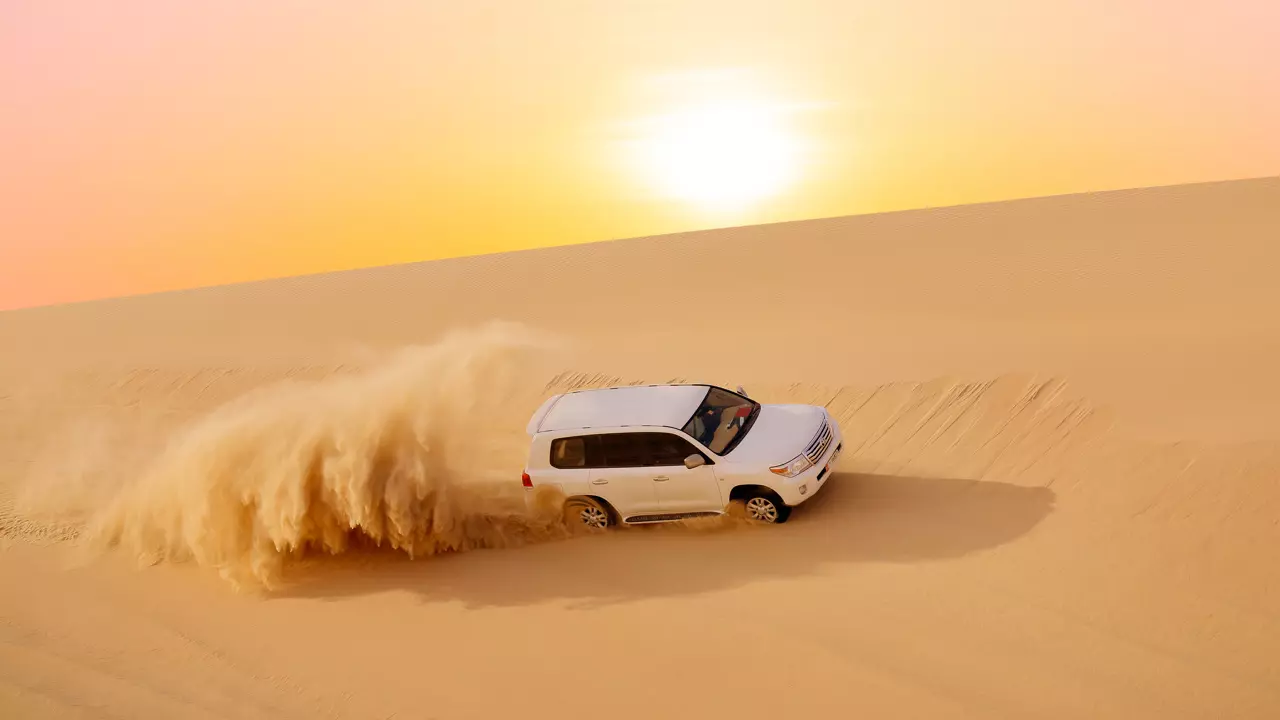
Al Ain works well as a full-day trip from either Dubai or Abu Dhabi, since the drive is similar from both — around 90 minutes on well-maintained highways. Because it is inland and desert-adjacent, it also pairs naturally with a desert safari itinerary; several Abu Dhabi-based desert safari and city tour operators can route through or combine with an Al Ain stop on request.
Frequently Asked Questions
Why is Al Ain called the Garden City?
Because of its date palm oases and tree-lined streets, sustained for millennia by falaj — a gravity-fed underground irrigation system that channels groundwater from the base of Jebel Hafeet across the plain. Al Ain is greener than any other inland UAE city as a direct result.
Is Al Ain Oasis a UNESCO World Heritage Site?
Yes. Al Ain Oasis is part of the "Cultural Sites of Al Ain" UNESCO World Heritage inscription from 2011, along with Hili, Bidaa Bint Saud and Jebel Hafeet archaeological sites — recognising continuous oasis agriculture and falaj irrigation going back to the Bronze Age.
How tall is Jebel Hafeet and can you drive up it?
Jebel Hafeet rises to about 1,240 metres, the UAE's second-highest peak. A paved road with roughly 60 curves switches back to the summit, open to private cars, and is popular at sunset for the view over Al Ain and, on clear days, into Oman.
How far is Al Ain from Dubai and Abu Dhabi?
About 130 km from Dubai (roughly 1.5 hours) and about 160 km from Abu Dhabi city (also around 1.5 hours), since Al Ain sits inland near the Omani border, roughly equidistant from both.